
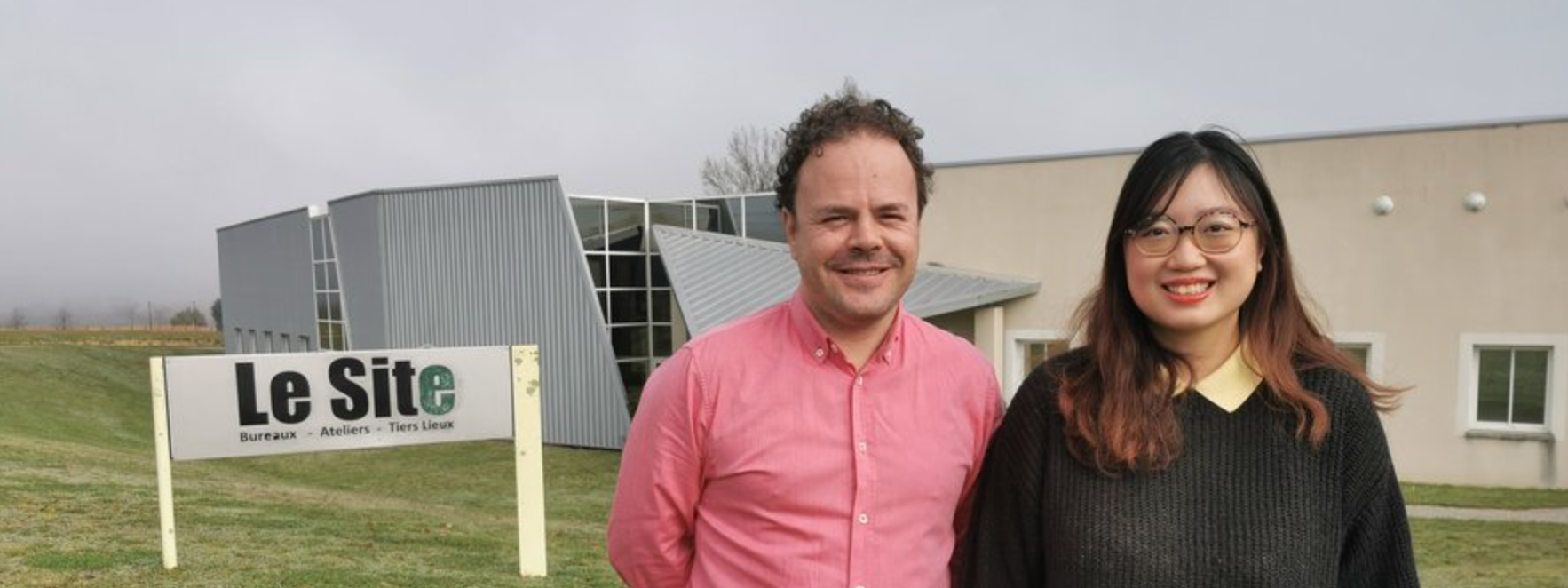
Meet Sunbiose, one of the five HEIPowered Startup Pitch Competition finalists
We are kicking off our interview series with the five finalists of the second edition of the HEIPowered Startup Pitch Competition!
First up is Sunbiose, one of the five startups selected to pitch in this year’s final. Sunbiose is building renewable energy communities that enable rural and peri-urban towns in France to produce and share locally generated electricity.
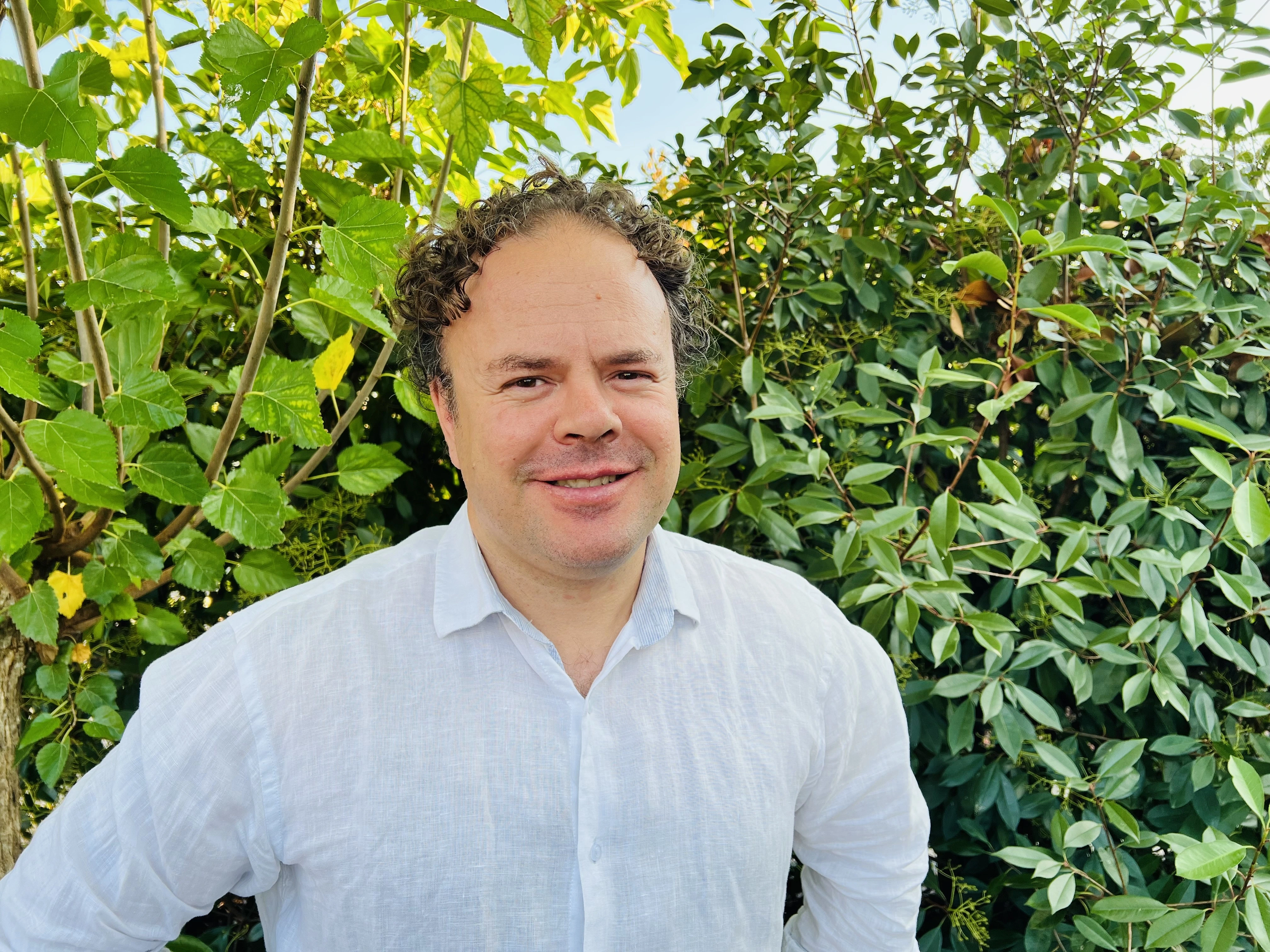
We spoke with Raphael Cervan, co-founder of Sunbiose, about the idea behind the startup, his entrepreneurial journey, the support received through the EIT Higher Education Initiative, and what being selected as a finalist means for the team as they look to scale their solution.
Tell us about your startup. What does it do, and what problem are you trying to solve?
Sunbiose builds and runs renewable energy communities for rural and peri-urban towns in France. Electricity is produced on local rooftops and shared with the homes, schools and businesses around them.
These towns own the rooftops and pay the rising bills, but they are too small for large energy developers and have no internal expertise to act alone. Four barriers block them: legal complexity, over twenty contracts per project; a coordination burden of more than ten stakeholders; financial risk, because no standard bank product exists for shared energy; and opacity, because once a community is running, participants cannot see where their energy comes from or what they actually save. We remove all four. We identify the participants, design, finance and install the plants as third-party investor so the town invests nothing, and we operate the community for thirty years. And our patented device makes the energy visible in real time. A national research study found that real-time access alone raises local consumption of the energy produced by 22%.
How did the idea come about, and how did your entrepreneurial journey begin?
I spent fiteen years at Airbus as a chief engineer and programme manager. I left because I wanted to create and lead something with real ecological and social impact, and I enrolled in an entrepreneurship master's programme at Paris-Saclay to do it properly.
That is where I found the idea and matured it. My research thesis there was on the business models of energy communities in Europe, and it became the intellectual foundation of Sunbiose. I came out of it convinced, as the European Commission is, that energy communities can become a pillar of the energy transition. My co-founder Truc Minh Thanh Ly joined from seven years of banking risk management, and we started the company around a simple conviction: the regulation already exists, what is missing is someone willing to carry the whole chain.
Which EIT Higher Education Initiative project supported you, and how did it help you develop your startup?
We were supported through CodeUnited, a project funded by the EIT Higher Education Initiative, via the EDHEC incubator. The incubation helped us structure our offer, prepare the fundraising round we are currently running, and trigger our acceleration.
What has been the biggest challenge in your entrepreneurial journey so far?
Creating a new model from scratch. Shared energy as a service did not exist as a business, so there was no playbook, no benchmark and no bank product to lean on. We built it with a small team, limited resources and no network at the beginning, in a political and geopolitical context that has been anything but stable. Everything had to be invented and proven at the same time
Where is the startup today, and what have you achieved so far?
Twenty-seven energy communities are underway, five of them already producing and operating, and our revenue is mostly recurring because we keep operating every community we build.
In September 2026 the European Patent Office granted our patent on the device that makes an energy community steerable in real time. For a company of our size, holding a granted European patent rather than a pending application is a rare position, and it protects the part of our model that competitors would find hardest to rebuild.
But the achievement we are proudest of is not a number. In Montigny-en-Arrouaise, a village in the Aisne, fourteen local producers and fifty participants across two municipalities now share their own electricity, EV charging arrived with it, and around ten thousand euros a year stays inside the territory instead of leaving it. A village that size does not usually get to decide anything about its energy. It has been featured on four national TV channels, and mayors now call us because they saw it.
What makes your approach or solution different?
Three things.
First, integration. We are the only player in France covering the entire chain, from finding the participants to operating the community thirty years later. Every part handed to a different company is a point where a project dies.
Second, the business model. We turned shared energy into a subscription service. The town invests nothing, and we carry the structuring, the financing and the operation. That is what makes these projects possible for communities with no capital budget.
Third, and this is the one that matters most to us, real time changes what a community can do. Seeing your energy as it flows is not just transparency, it is power: participants stop being billed and start deciding. And the next layer, already validated in laboratory conditions, will synchronize EV chargers, water heaters and batteries with local production, so each community becomes a flexibility resource for the national grid. A village stops being a passive consumer and becomes an actor of the energy system.
What does it mean to you to be part of the EIT Higher Education Initiative Community and to have opportunities such as the HEIPowered Startup Pitch Competition?
There are already European programmes supporting energy communities. What this one brings is different: visibility at a scale we could never reach alone, and access to investors we need, not only to finance Sunbiose but to finance the clusters of projects we deploy.
Beyond that, it is simply in our DNA. Pooling knowledge, sharing and co-building is exactly what we ask towns to do with their energy. It would be odd to run our own company any other way. This community is a place where we can both give and take.
What does being one of the five finalists mean to you, and what would securing one of the three winning positions enable you to do?
Being among five finalists across the whole initiative tells us that a company headquartered in a tiny rural village in the French south-west, serving rural and peri-urban towns nobody was serving, is answering a European problem and not only a local one. That matters more to us than the ranking.
What are your next steps, goals or biggest needs as you look to grow the startup?
Three priorities. Scale deployment across France and then Europe. Take the active piloting layer of our device from laboratory validation to field demonstration and certification. And grow the team, starting with an experienced renewable project manager. Our biggest need is capacity, not ideas. Brains and the working capital to say yes to every town that calls.
What advice would you give to other founders at the beginning or early stages of their entrepreneurial journey?
Do not hesitate to ask for help. Connect with people, listen, stay curious, share your ideas rather than protect them.
Above all, go and challenge your idea with the people you are supposed to help. Dive into their problem until you understand it from the inside, and put your solution in front of them as early as you can, even when it is far from perfect.
And find something you are genuinely passionate about. Entrepreneurship is not an easy path. It gets easier when you see a real purpose in what you do and in how you do it. That was the case for me at least.
Why do you think it is important for higher education institutions to support entrepreneurship and startups through initiatives like the EIT Higher Education Initiative?
Remarkable things are born in universities. Turning them into products and services that improve the lives of Europeans is not a natural next step, and it does not happen on its own.
It takes knowledge that researchers and first-time founders simply do not have, it takes coaching, and it takes resources. Above all it takes time: time to find a market, to refine a value proposition until it actually matches someone's problem, and to develop the solution that meets it. Very few early ventures can buy themselves that time. Higher education institutions are one of the rare places that can give it, alongside the expertise and the credibility a young company cannot build for itself.
And at European scale, initiatives like this one add what a single institution cannot: they connect those ecosystems across borders, so a venture born in one country reaches the mentors, the peers and the investors of the others.
Is there anything else about your startup, team or journey that you think people should know?
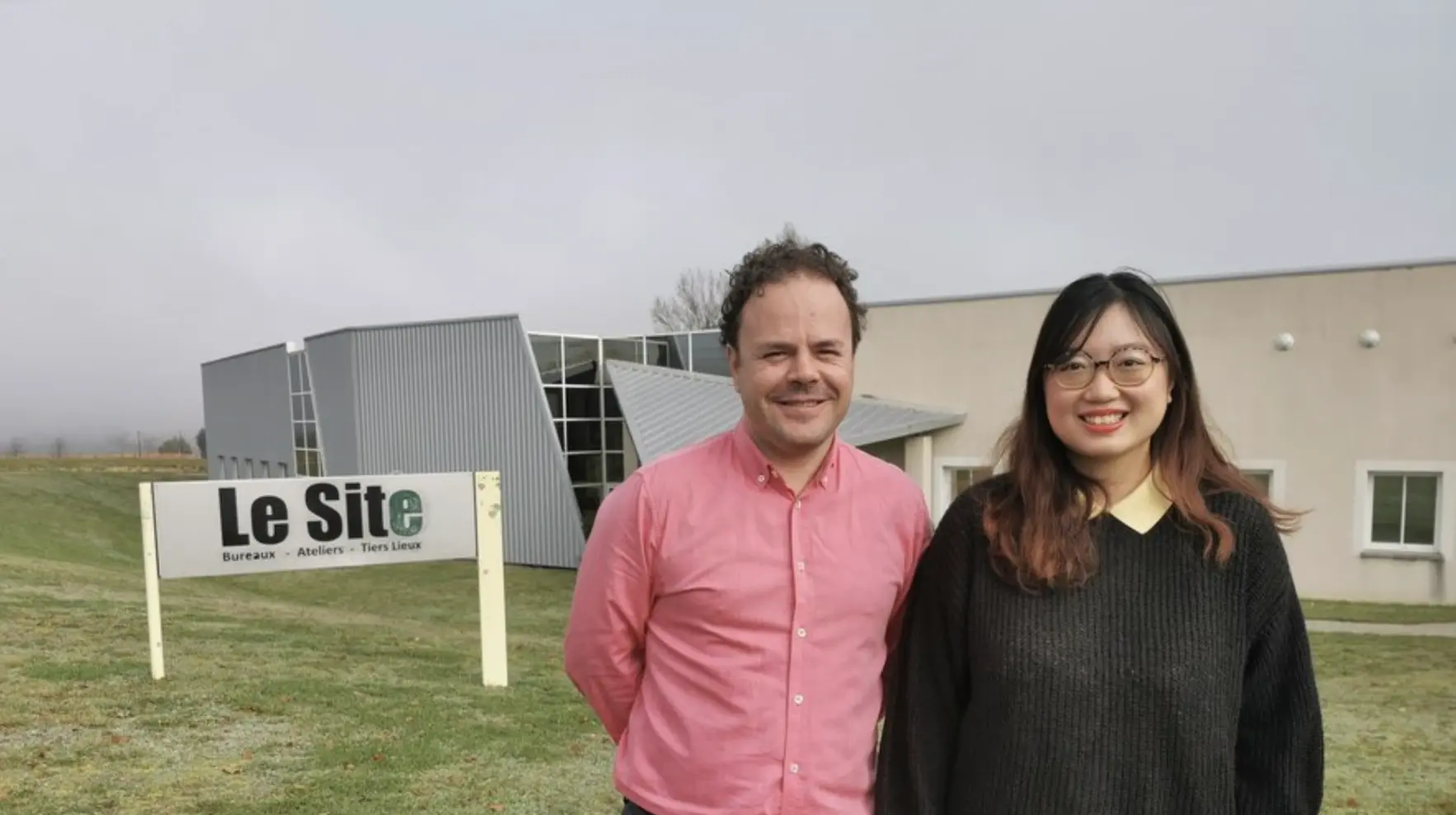
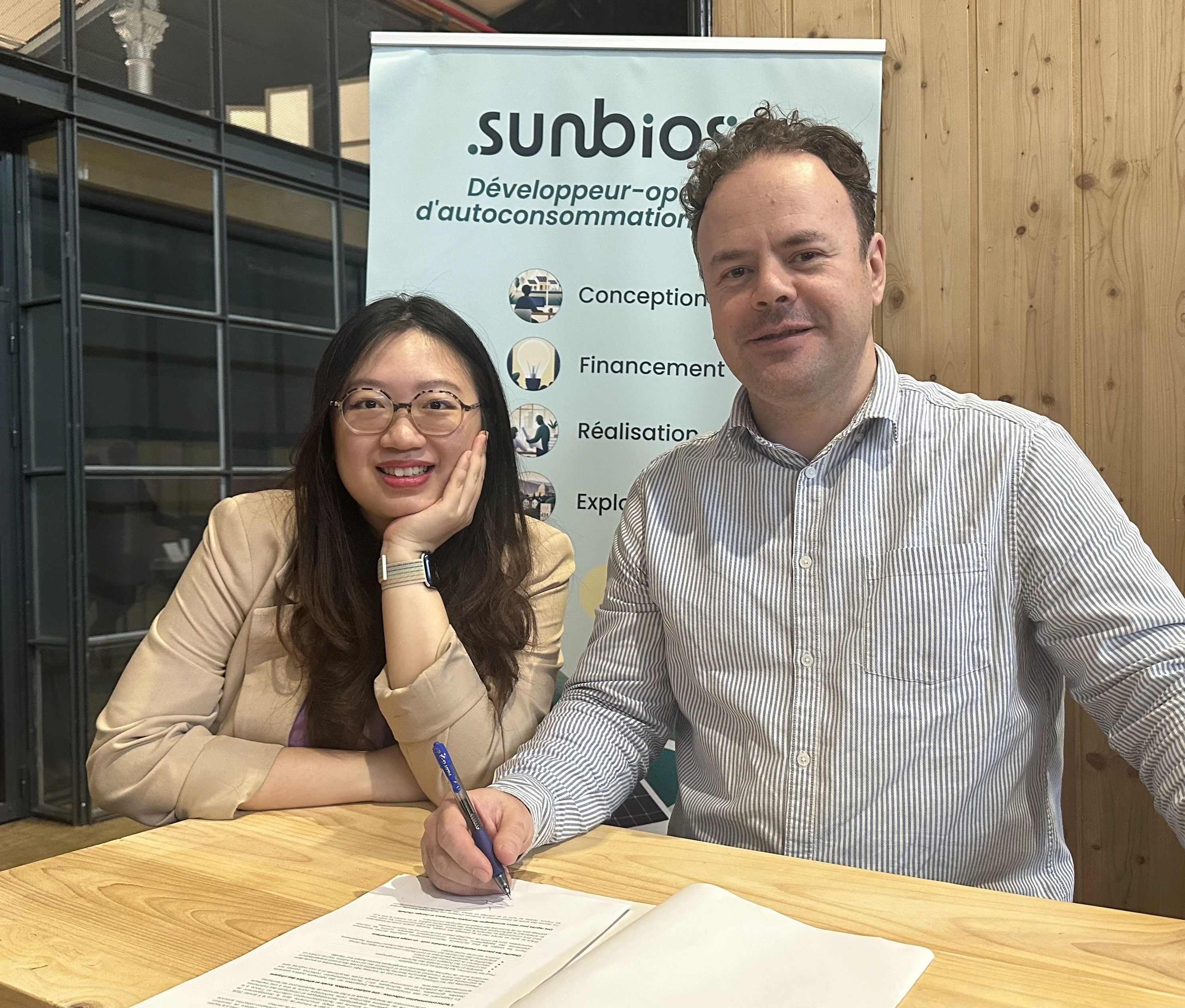
We are two founders, one Franco-Brazilian and one Franco-Vietnamese, and Truc Minh Thanh Ly, she is my co-founder and our CFO. We run the company from a village in south-west France. Living in a rural area is how we understood that these projects are not really about energy.
The electrons a town produces are not only green, cheap energy. They are how a territory gets back the power to decide for itself, locally, with all its stakeholders around the table. That power can be used to support low-income households, to lower local taxes, to keep shops open, to attract doctors to a medical desert. Towns can share energy with each other. Local producers can finally sell their energy where they live. The economic value stays. Territories become more independent and more resilient. And along the way people meet, discuss and build bonds that did not exist before.
Sunbiose is a mission-driven company under French law, so those commitments are legally binding and independently monitored. I also serve as a technical expert on citizen energy advirory hub (CEAH) for the European Commission and as an elected municipal councillor, which means I sit on both sides of the table we are trying to change.
Thank you, Sunbiose, for sharing your journey with us! Want to learn more about the startup and its work? Connect with Raphael Cervan in the HEI Community and continue the conversation.