
From Moldova to the HEIPowered Startup Pitch Competition: Discover Atlas Consult
Published on October 9, 2026
Meet Atlas Consult, one of the five finalists of the second edition of the HEIPowered Startup Pitch Competition!
Based in the Republic of Moldova, Atlas Consult helps startups and SMEs navigate certification requirements and access European markets through affordable consultancy, training and AI-powered compliance solutions.
Supported by the EIT Higher Education Initiative project AI-InnoScEnCE, the startup is turning decades of expertise into an innovative, scalable solution.
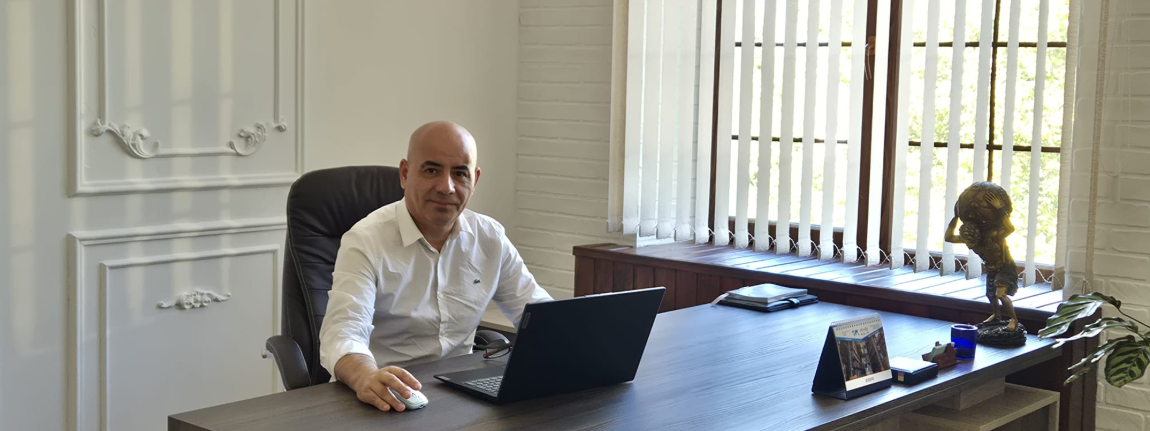
We spoke with Costel Stanca, Administrator and Team Coordinator at Atlas Consult, about their entrepreneurial journey, the challenges of making compliance accessible to smaller businesses, and their ambitions for the future.
Tell us about your startup. What does it do, and what problem are you trying to solve?
Atlas Consult makes startups and SMEs certification-ready for the European single market. We implement management systems to be certificated according ISO 9001 (quality), ISO 14001 (environment), ISO/IEC 42001 (artificial intelligence) and other management standards combining hands-on consultancy and training with our own digital toolkit, and now with an AI-assisted compliance module.
The problem we solve is a barrier most people never see. For cities, transport operators and EU partners, a certified management system is a de facto entry requirement: a startup without one loses tenders before it even starts competing. Yet the traditional route takes 6 to 12 months and is priced for corporations, not for early-stage teams. On top of that, the EU AI Act and ISO/IEC 42001 are creating an entirely new layer of governance duties for organisations that build or use AI, and in Moldova and the wider RIS region there is almost no support available.
Our answer is to bring startups to certification readiness in 4–6 months, at a cost they can actually budget for. In short: we want compliance to be a launchpad, not a barrier.
How did the idea come about, and how did your entrepreneurial journey begin?
It came from the field, not from a brainstorm. I have spent more than 25 years as an engineer, lead auditor and university professor, implementing and auditing management systems. Over the years I kept meeting the same company: small, genuinely innovative, with a good product, and unable to enter European value chains because it had no certified management system, and unable to afford the classic route to getting one.
At the same time I could see the inefficiency on our own side of the table. The same documentation work was being rebuilt manually, from scratch, for every single client. Atlas Consult began as a response to both problems: package what we already do well into a staged, modular, affordable methodology instead of selling open-ended consultancy hours.
The real entrepreneurial step came more recently, when it became clear that the repetitive part of compliance work, drafting and cross-referencing documentation, analyzing nonconformities or monitoring indicators can be automated with AI, leaving our experts free for the judgement that actually matters. That is when a consultancy practice turned into a startup with a product.
Which EIT Higher Education Initiative project supported you, and how did it help you develop your startup?
We were supported through AI-InnoScEnCE - “AI-Empowered Innovation in Natural Science and Engineering for Circular Economy”, an EIT Higher Education Initiative project coordinated by Technische Universität Hamburg, with partners in Germany, Serbia and Moldova, including Business Incubator Cahul, Fundația Inotek and Cahul State University “Bogdan Petriceicu Hasdeu”.
What it gave us was structure and an ecosystem. The project pushed us to move from “expert practice” to a defined product with a specification, a roadmap, a business model and measurable indicators. Its two core themes mapped remarkably well onto our own work: AI as an enabler, which is exactly what our AI-assisted compliance module is about, and the circular economy, which we embed into every ISO 14001 implementation from day one.
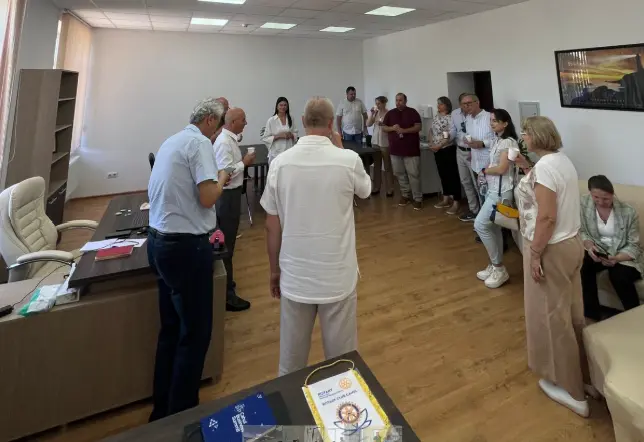
Just as importantly, it connected us to people. Mentoring, entrepreneurial training, and access to a European network of universities, incubators and startups, the kind of access that is very hard to build from Cahul on your own, plus the route into the EIT community that eventually led to this competition.
What has been the biggest challenge in your entrepreneurial journey so far?
Two challenges, and they reinforce each other.
The first is the market itself. In Moldova, certification is still too often seen as a piece of paper you buy rather than a management system you build. A large part of our work is not technical at all, it is convincing a founder that a management system is a commercial asset that wins tenders, reduces risk and attracts partners. Educating a market takes considerably longer than selling into one that already exists.
The second is the economics of classic consultancy. Revenue is tied to expert hours, so serving more startups means hiring more senior auditors, and there are very few of them in a country the size of Moldova. That ceiling is precisely what our AI-assisted module is designed to break: it lets the same expert pool serve far more clients without diluting quality.
Where is the startup today, and what have you achieved so far?
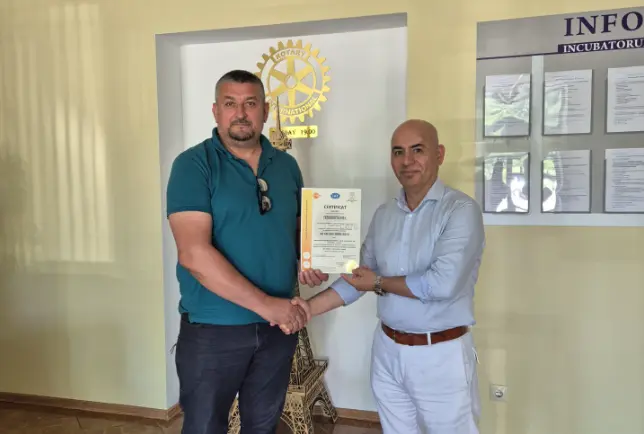
We are an operating consultancy, not a concept on a slide. We are under process to validate in practice our methodology. 3 Moldovan clients implemented QMS or integrated management system (ISO 9001, ISO 14001, ISO 45001) and have been certified by accredited third-party certification bodies.
Today we own a real asset base:
• Audit services — internal and second-party audits, and certification-readiness validation.
• Training capacity — programmes from awareness level to internal auditor, built on real implementation cases.
• A flexible expert pool — certified experts engaged per project, which keeps our fixed costs low and the model scalable.
• A regional network of SMEs, business associations, certification bodies and public institutions in Moldova.
We have under development a proprietary toolkit: gap-analysis instruments, modular templates (process maps, procedures, risk registers, KPI dashboards) and internal audit checklists, refined across client projects.
The AI-assisted compliance module and built our ISO 42001 readiness service is among the first of its kind in Moldova and the RIS region. And we are now one of five finalists in the HEIPowered Startup Pitch Competition.
What makes your approach or solution different?
Three things, and they only work together.
Staged and startup-priced. We bring an organisation to certification readiness in 4–6 months instead of 6–12, in four clear stages - diagnose, build, verify, certify - that a small team can plan and budget for.
AI inside the delivery, not just in the pitch. LLM technology drafts and reviews management system documentation tailored to each organisation, automatically classifies nonconformities and audit findings, and feeds live dashboards for quality and environmental KPIs. Our target is a 40% reduction in implementation time and cost compared with traditional consultancy.
One provider, more standards. We integrate implementation on different management systems into one, with sustainability and circular economy practices embedded from day one, and ISO 42001 readiness as a genuine first-mover offer in our region.
And there is one more thing behind all of it: we are auditors ourselves. Everything we build is built by people who also sit on the other side of the table, including within ASRO technical committees, where these standards are actually written and debated.
What does it mean to you to be part of the EIT Higher Education Initiative Community and to have opportunities such as the HEIPowered Startup Pitch Competition?
For a company based in Moldova, a candidate country and an underrepresented RIS region, it means access. Access to peers facing the same problems, to mentors, to methodology, and to a European market that is otherwise very hard to reach from Cahul. It also brings a kind of credibility that no marketing budget can buy: being part of this community tells a potential European partner that we have been assessed and selected on substance.
It also matches something we believe in. Half of our team teaches at university level, and we have never accepted that academia and business should be separate worlds. What the EIT Higher Education Initiative does, turning academic capacity into ventures, is the same thing we try to do on the consultancy side: turn deep expertise into a service that helps other people grow their companies.
What does being one of the five finalists mean to you, and what would securing one of the three winning positions enable you to do?
Being selected among five is validation of something we have argued for years, often to sceptical audiences: that compliance, a topic most people find dry, is real infrastructure for the single market, and that making it affordable for startups is a problem worth solving. Coming from Moldova, that recognition carries particular weight.
A winning position would let us do the one thing we cannot yet fund out of our own cash flow: build and validate the AI-assisted compliance module properly. That means development, piloting with startups from the EIT Urban Mobility community, and validation through real audits rather than assumptions.
And honestly, the mentoring hours matter as much as the cash. We are strong technically, with 25+ years of audit and implementation experience, but we are still learning how to scale a product business beyond consultancy hours. That is exactly where experienced mentors would make the biggest difference.
What are your next steps, goals or biggest needs as you look to grow the startup?
Our 12-month roadmap is deliberately concrete:
• Months 1–3 — Specify and build: functional specification and development of the AI-assisted compliance module.
• Months 4–6 — Pilot and launch: piloting with startups, including from the EIT Urban Mobility community, and launch of the ISO 42001 service line.
• Months 7–9 — Validate: validation through real audits, pricing refinement, first paying clients.
• Months 10–12 — Roll out: commercial rollout and partnerships with accelerators and business associations.
Our targets for that period: 15 startups and SMEs supported with gap analyses and toolkits, 5 of them reaching certification readiness, 50 professionals trained in quality, environment and responsible AI with a minimum of 40% women participation, and a 40% average reduction in implementation time and cost.
Our biggest needs are, in order: pilot clients - startups willing to go through certification with us and give us honest feedback; funding to complete the AI module; and distribution partners - accelerators, incubators and business associations, as we prepare to scale into Romania and other RIS countries.
What advice would you give to other founders at the beginning or early stages of their entrepreneurial journey?
Start by selling what you already know, before you build what you imagine. Our product came out of 25 years of client work, not out of a workshop with sticky notes. The best startup ideas are usually hiding inside the work you are already doing.
Do not treat compliance as paperwork to deal with later. A management system built early is inexpensive; retrofitted under the pressure of a tender deadline, it is painful and costly. And it opens doors, very often it is the difference between being eligible for a contract and not being in the room at all.
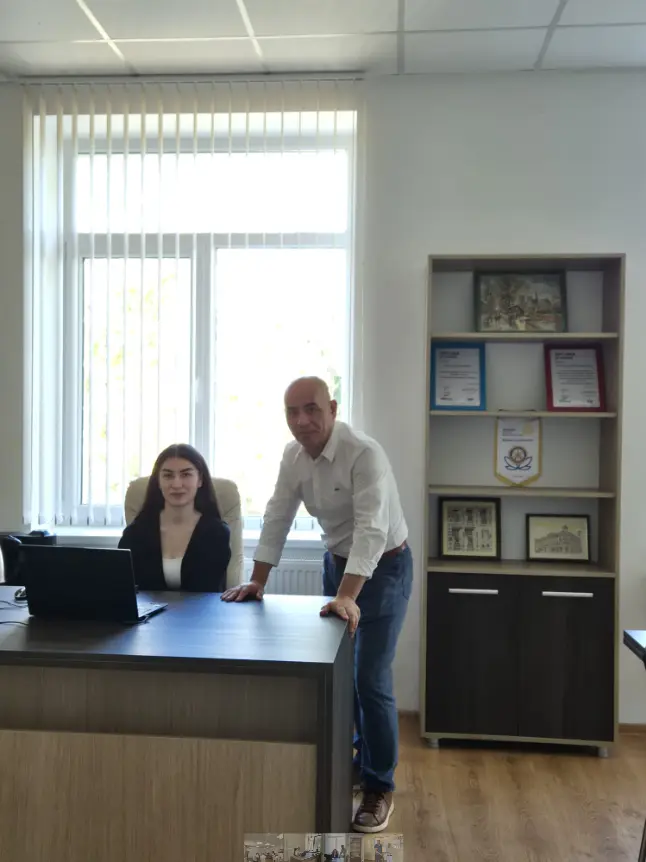
Build a team that disagrees with you. Ours is deliberately mixed: quality, environment, information security, and a junior consultant learning the trade. The junior consultant's questions are frequently the most useful ones we get.
Why do you think it is important for higher education institutions to support entrepreneurship and startups through initiatives like the EIT Higher Education Initiative?
Because universities hold the expertise, and the market needs that expertise in a usable form. Knowledge that stays in a lecture hall or a journal article does not change an economy; knowledge turned into a service, a product or a venture does.
This is especially true for RIS countries. In Moldova, universities are one of the few stable concentrations of technical competence we have. If they also teach students how to turn that competence into a venture, they stop being only training providers and become engines of economic convergence with the European Union.
I can speak to this personally: I teach and I run a company, and each one makes the other better. Students get real cases instead of hypothetical ones; clients get the rigour of academic method. Initiatives like the EIT Higher Education Initiative build that bridge systematically, across institutions and countries, instead of leaving it to individual people who happen to have a foot in both worlds.
Is there anything else about your startup, team or journey that you think people should know?
Two things.
First, our team. It is small but unusually deep: more than 25 years of audit and implementation experience, PhDs from ASE Bucharest and Politehnica Bucharest, lead auditor qualifications across ISO 9001, 14001, 45001, 27001 and 42001, and membership of ASRO technical committees (TC 56, TC 199, TC 323) where these standards are actually discussed. It is also gender-balanced, 50% women in our core team, with a minimum 40% women participation target across every project activity, and intergenerational by design: we deliberately train junior consultants inside real projects rather than in classrooms.
Second, the mission behind the rather dry word “compliance”. Moldova is on its way into the European Union. Whether Moldovan companies end up inside European value chains or watching from the outside will be decided by very concrete things: certified quality management, demonstrable environmental performance, responsible AI governance. Our ambition is to make all three accessible to a startup, not only to a corporation, and to prove that a company from an underrepresented region can build a service the rest of Europe wants to use.