
From research to smarter farming: Meet Neurohive, the fifth HEIPowered Startup Pitch Competition finalist
Published on October 30, 2026
Meet Neurohive, the last of the five finalists of the HEIPowered Startup Pitch Competition! Based in Greece, Neurohive is transforming sheep and goat farming through AI-powered technology, helping farmers make smarter decisions and improve productivity.
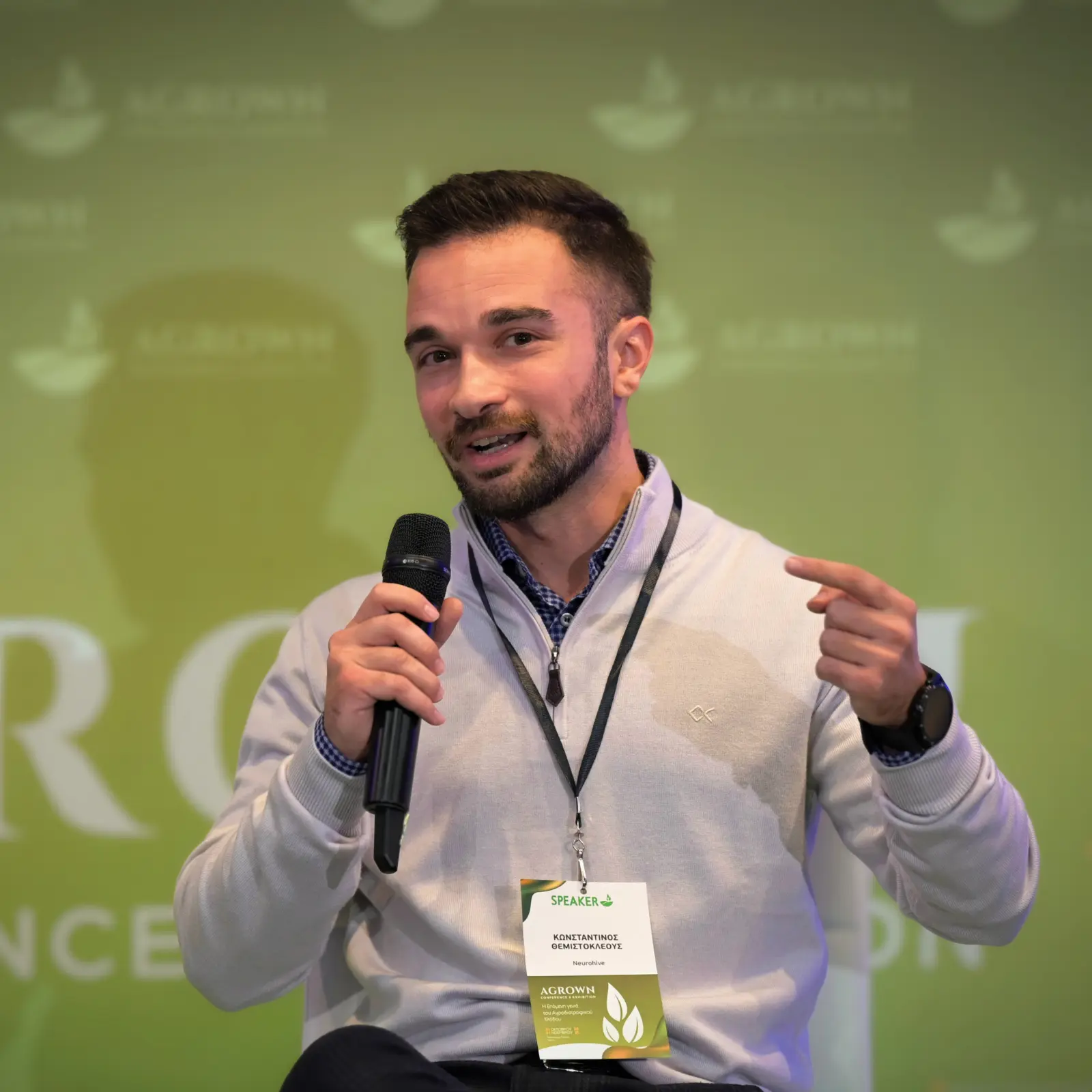
We interviewed Konstantinos Themistokleous to learn more about the startup's journey, its innovative approach to livestock farming, and what reaching the competition's final means for the team.
Tell us about your startup. What does it do, and what problem are you solving?
Neurohive builds the AI brain of sheep and goat farms. Our platform, Digital Farmer, pulls together data from wearables, cameras, milking systems and farmer inputs, and turns it into daily decisions on health, milk, reproduction and cost. Sheep and goat farming is a $200B+ industry and the least digitised part of livestock. Most farmers still run on paper and memory. We give them a decision intelligence tool, built specifically for small ruminants.
How did the idea come about, and how did your journey begin?
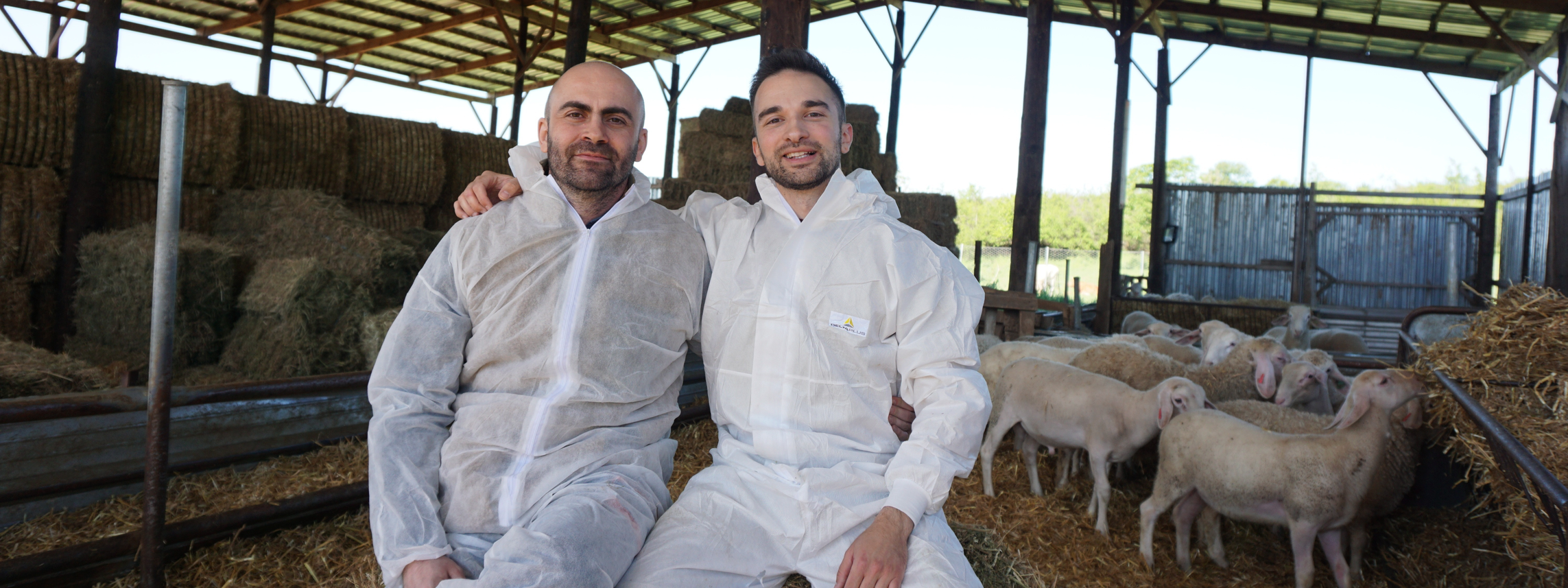
I am a veterinarian with a PhD in farm animals. For ten years I worked with sheep and goat farmers, and I kept seeing the same thing. Decisions are made on gut feeling, or at best on the average animal. Even on modern farms, with real investment in infrastructure, farmers still write everything in notebooks. Those notebooks can get lost or damaged. Farm conditions are hard. Without precision tools, the best case is a spreadsheet and a decision based on the average animal. And that is where they lose. Because the average animal does not exist. A strong herd comes from taking every factor into account and managing each animal as precisely as possible. That is what separates high-yield operations from the rest. We started Neurohive to close that gap, and make every sheep and goat farm a high-yield operation.
Which EIT Higher Education Initiative project supported you, and how did it help?
Our connection to the initiative is the HEIPowered competition itself. We are one of five startups selected for Stage 2, and we will pitch at the in-person final. To be straight with you, no prior EIT HEI project incubated us on the way here. This is our entry point into the community.
What has been the biggest challenge so far?
Trust. Farmers have been promised technology before and, at times, let down. Innovative research projects at some point come to an end, so the support and further development stops, too. You cannot win farmers over with fancy marketing material. You earn their trust by understanding the specific challenges of sheep and goat production, speaking their language, and proving the product saves them time and money on their own farm. Building that trust farm by farm is hard. It is also why our growth is a signal that matters.
Where is the startup today, and what have you achieved?
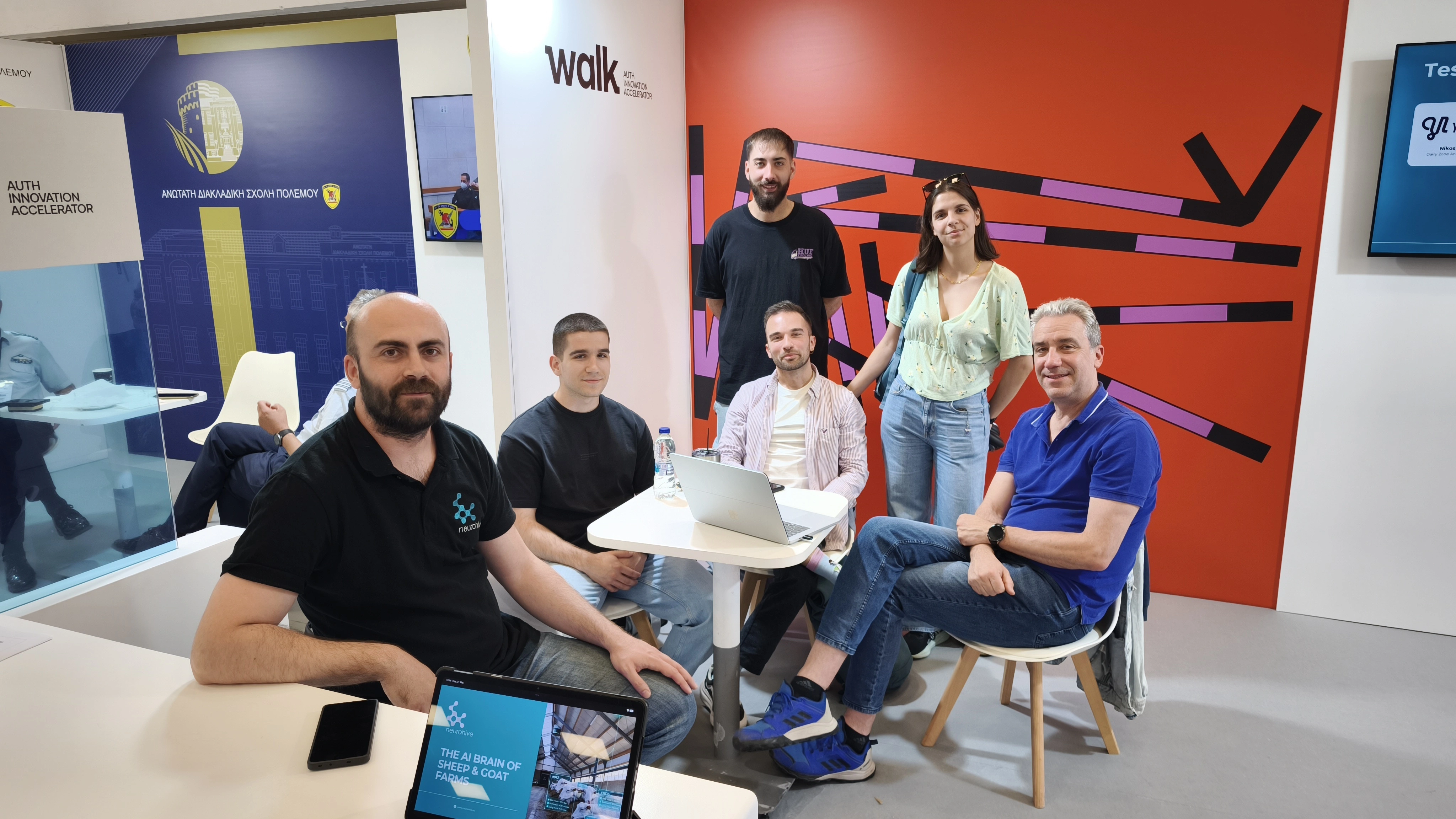
We went from 7 to 84 paying farms in six months. That is 12x growth. We now have around 40,000 animals in the system across Greece and Cyprus, and three cooperatives onboarded. We were also selected for the EIT Food Accelerator Network at Wageningen.
What makes your approach different?
Our product is not a tool adapted from dairy cattle, and it is not a single-point gadget. We are building the data layer for small ruminants from the ground up. Health, milk, reproduction, genetics and cost, all in one place, per animal. A domain-specific platform architecture and a unified dataset are the moat.
What does being part of the EIT HEI Community and opportunities like HEIPowered mean to you?
It connects us to people who take deep tech from research to market. That community understands what we are building and why it is hard. Being in it means we are not doing this alone. The competition gives an early-stage AgTech company from Greece visibility it would not otherwise reach.
What does being one of five finalists mean, and what would winning enable?
It tells us the work is being seen beyond our own farms and cooperatives. That matters at this stage. A winning position would let us move faster on the two things ahead of us: our first computer vision product for sheep and goats, and our expansion into new European markets.
What are your next steps, goals or biggest needs?
We are raising our seed round to expand into new European markets like France and the Netherlands, and to launch the first computer vision solution built for sheep and goats. Our biggest need is the right partners and investors who know AgTech and think long term.
What advice would you give to early-stage founders?
Talk to your potential users before you build. Learn to tell the truth from compliments and fluff. Build a feedback loop, and keep talking to them. We spent our first months on farms, not on slides. Everything good came from that. And choose your problem wisely. Pick a real, pressing one that you understand deeply.
Why is it important for higher education institutions to support entrepreneurship?
Universities hold research that rarely reaches the people who need it. Most of it stays in papers. That is why we founded Neurohive in the first place, to turn research into real products that touch farmers' lives. Initiatives like this one turn research into companies, jobs and products. For a sector like ours, where the science exists but the tools do not, that bridge is everything.
Anything else people should know?
We are a team of veterinarians and engineers working on a part of farming most of the tech world ignores. Sheep and goats feed millions of people and support rural economies across Europe. In many areas they are a cornerstone of rural life. Giving those farmers modern tools is overdue. That is the work.